Melidia: The Human Touch in Digital Design
In the landscape of digital typography, where precision and uniformity are often paramount, the emergence of hand-crafted typefaces offers a compelling counterpoint. Melidia stands distinctly in this space. It is not a font that whispers neutrality; it declares a presence. Defined by its bold, hand-brushed character, Melidia brings an organic, human energy to projects that might otherwise feel sterile or overly manufactured. This typeface bridges the gap between the artisan's studio and the designer's screen, providing a tool that feels both contemporary and deeply personal.
The Defining Characteristics of a Hand-Brushed Font
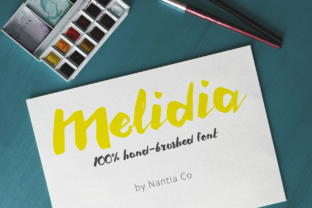
Understanding what makes Melidia unique requires a look at its foundational attributes. The core of its design lies in the simulation of physical brush strokes. Each letterform carries the weight and texture of a brush loaded with paint or ink. The strokes are not perfectly uniform; they have a natural variation in thickness, with subtle flares and tapering that mimic the pressure and movement of a hand. This creates a sense of rhythm and flow within the text.
Furthermore, Melidia is intentionally bold. This isn't a delicate script meant for small, embellished quotes. Its weight gives it substantial visual impact, making it excellent for commanding attention. The modern style of the lettering means it avoids overly ornate or historical calligraphic flourishes. Instead, it uses clean, contemporary shapes that are easy to read, even with its expressive brush texture. This combination of raw energy and modern clarity is where its versatility begins.
Where Melidia Finds Its Natural Home: The Food and Hospitality Sector
One of the most immediate and resonant applications for Melidia is within the food industry. The typeface's organic, crafted quality directly parallels the values of many modern food brands: authenticity, craftsmanship, and sensory appeal.
For restaurant menus, Melidia can transform a simple list into an evocative experience. A menu header set in Melidia suggests care and personality, whether for a gourmet burger joint or a rustic bakery. It feels inviting and confident. In food branding and packaging, this font helps products stand out. On a jar of artisan honey, a box of craft chocolates, or a bottle of small-batch sauce, the hand-brushed text communicates a story of human effort and quality, which is often a key marketing message. It visually affirms that the contents inside are not mass-produced but thoughtfully made.
Expanding Beyond the Plate: Universal Design Applications
While the food sector is a perfect match, the utility of Melidia is far broader. Its modern style makes it adaptable to any design need requiring warmth and contemporary appeal.
In social media posts, where capturing attention in a crowded feed is critical, Melidia's boldness and personality make it an excellent choice for key headlines, campaign slogans, or announcement graphics. It cuts through the noise with a friendly, human voice. For event posters, wedding invitations, or boutique retail signage, it adds a tailored, bespoke feeling. Educators and creators might use it in presentation titles or on workshop materials to convey a hands-on, engaging approach. Even in digital interfaces for creative apps or lifestyle websites, a strategic use of Melidia in logos or hero sections can establish a brand identity that is both trendy and approachable.
Practical Considerations for Using a Bold Display Font
Working with a typeface like Melidia requires some mindful application to maximize its effectiveness. Primarily, it is a display font. Its intricate brush details and bold weight are best used for headlines, titles, logos, and short, impactful phrases, rather than for long bodies of text. For readability in paragraphs, pairing it with a clean, neutral sans-serif font is recommended.
Another consideration is context. The strong personality of Melidia means it should align with the overall brand or project message. It fits projects wanting to express creativity, boldness, artisanal quality, or modern energy. It might be less suitable for extremely formal, technical, or minimalist contexts where neutrality is the goal. Color choice also interacts powerfully with its texture; solid, vibrant colors can emphasize its boldness, while softer, textured backgrounds can enhance its hand-made feel.
The Advantage of Organic Texture in a Digital World
The primary advantage of choosing Melidia lies in its ability to inject humanity into digital design. In a world saturated with sleek, geometric fonts, a hand-brushed typeface offers differentiation. It provides a visual shorthand for qualities like creativity, authenticity, and passion. For business owners and brand managers, this can be a direct way to connect emotionally with consumers, suggesting that behind the brand are real people with real skill.
For designers and hobbyists, Melidia serves as a ready-made artistic element. It allows one to achieve a complex, painted-letter look without requiring physical brush skills or lengthy illustration time. This efficiency, coupled with high-quality digital scalability and editing flexibility, makes it a powerful asset in a creative workflow. It encourages designs that feel bespoke and crafted, even when produced rapidly for digital platforms.
Ultimately, Melidia represents a choice. It is a choice to prioritize character over conformity, to select expression over invisibility. Its modern hand-brushed style is a tool for those who want their words to not only communicate information but also to convey an attitude—a confident, contemporary, and human-centric attitude. Whether anchoring a restaurant's identity, making a social media campaign pop, or giving a personal project a professional yet personal touch, Melidia offers a voice that is distinctly and deliberately heard.